loader image

From the Soil Up: Our Partnership with the University of Aveiro and Entogreen

The Science Behind the Study

In February 2024, we launched a three-year field trial in partnership with the University of Aveiro’s Department of Biology, CESAM, and EntoGreen, a
Portuguese company specialising in insect biotechnology, specifically Black Soldier
Fly (BSF). The trial is part of the InsectERA Agenda Mobilizadora, a national programme funded by the European Union that explores the role of insects in sustainable agriculture and the circular economy.

The study is being conducted on a parcel in Valença do Douro, at 400 metres altitude, planted over 40 years ago. These are old vines — not yet centenarian, but mature enough to express the kind of vine age that truly matters. They were chosen for a practical reason: the gentler terrain and better road access allow for more rigorous
scientific measurement than steeper, more remote sites. The intention is to apply what we learn in Valença do Douro further upstream — in our centenarian vineyard, Vinha das Silvas, on the schist slopes above the Rio Torto. Science begins where it can be done best. The ultimate focus is always the oldest vines.

At the centre of the study is something called frass — an insect-derived organic fertilizer. Frass is rich in organic matter, contains chitin residues from the insects themselves, and is nutrient-dense. It is produced through the bioconversion of larvae
of Hermetia illucens, the Black Soldier Fly. These larvae are extraordinary bioconverters: fed with olive pomace (the solid residue from olive oil production), they process this by-product and leave behind a fertilizer rich in nitrogen, phosphorus, organic matter, macro- and micronutrients, chitin, and diverse microbial activity.

The circular logic of this system is important to us. The olive pomace that feeds the larvae comes from the same agricultural landscape that surrounds our vineyards. What returns to the soil is not a synthetic input, but a living, biologically active material — the by-product of a by-product, transformed into something that nourishes the oldest vines of the Douro.

What the Results Show

The trial runs until 2027, and we are deliberately cautious about drawing conclusions before final results. That said, the interim report from January 2026, produced by the University of Aveiro, contains findings we believe are worth sharing.

Across all fertilised plots, organic treatments — including insect frass — stimulated measurable enzymatic activity in the soil. Enzymes are the engine of soil biology: they break down organic matter, release nutrients, and sustain the microbial communities that underpin vine health. Seeing this activity increase is a meaningful signal.

Perhaps even more relevant for the long-term health of these vineyards: soil water retention capacity increased substantially compared to the baseline measurement taken in January 2024, when compared to data recorded in July 2025. In a semi-arid region where summer droughts are becoming more frequent and severe, the soil’s ability to retain moisture is not a minor detail — it is a question of resilience. The increase in organic matter, confirmed through loss-on-ignition data, shows that the soil is actively changing.

As for the vines: physiological measurements indicate healthy levels of chlorophyll and carotenoids across all plots, consistent with well-nourished plants. No negative impact on vine health has been identified. So far, the biological indicators are positive.


Why Old Vines, and Why Now
There is a reason this study begins with old vines rather than young ones. The 40- year-old parcel in Valença do Douro is not ancient — but it represents what the Douro achieves when a vineyard is allowed to mature: deep root systems exploring schist soils, natural resilience to drought, and a relationship with the soil built over decades, not seasons. These are the qualities we aim to understand, protect, and reinforce.

Our ultimate concern, however, lies with truly old vineyards — the centenarian vines of Vinha das Silvas, above the Rio Torto, planted over a century ago and carrying genetic heritage that modern viticulture has largely lost. As members of The Old Vine Conference, a global non-profit organisation dedicated to the recognition and protection of historic vineyards, we believe that caring for old vines is a form of agricultural conservation.

The frass study is the science behind that conviction: a rigorous attempt to understand what these vines require from their soil and how we can provide it without resorting to synthetic solutions. We begin in Valença do Douro because conditions allow us to do the science properly. What we learn there, we intend to bring to the Silvas.

Looking Ahead
The trial will continue until 2027. We will share final conclusions once they are published. Until then, we extend our thanks to the team at the University of Aveiro — particularly the researchers from the Department of Biology and CESAM — and to Entogreen, for their partnership, rigour, and willingness to bring their science into
these very old vineyards.

The Douro has always been a place where survival required ingenuity. The vineyards of Valença do Douro have grown here for over forty years. The centenarian vines of Vinha das Silvas for more than a hundred. Our intention is to give them every possible advantage for the decades ahead.


The University of Aveiro field trial — “Assessment of the impact of frass on plant and soil health and productivity in Douro vineyards” — runs from February 2024 to 2027. It is conducted in partnership with the University of Aveiro’s Department of Biology, CESAM, and EntoGreen, within the framework of the EU-funded InsectERA Agenda Mobilizadora.
We Declared 2024


“Frankly, I think it’s a bomb.”
— Cristiano van Zeller

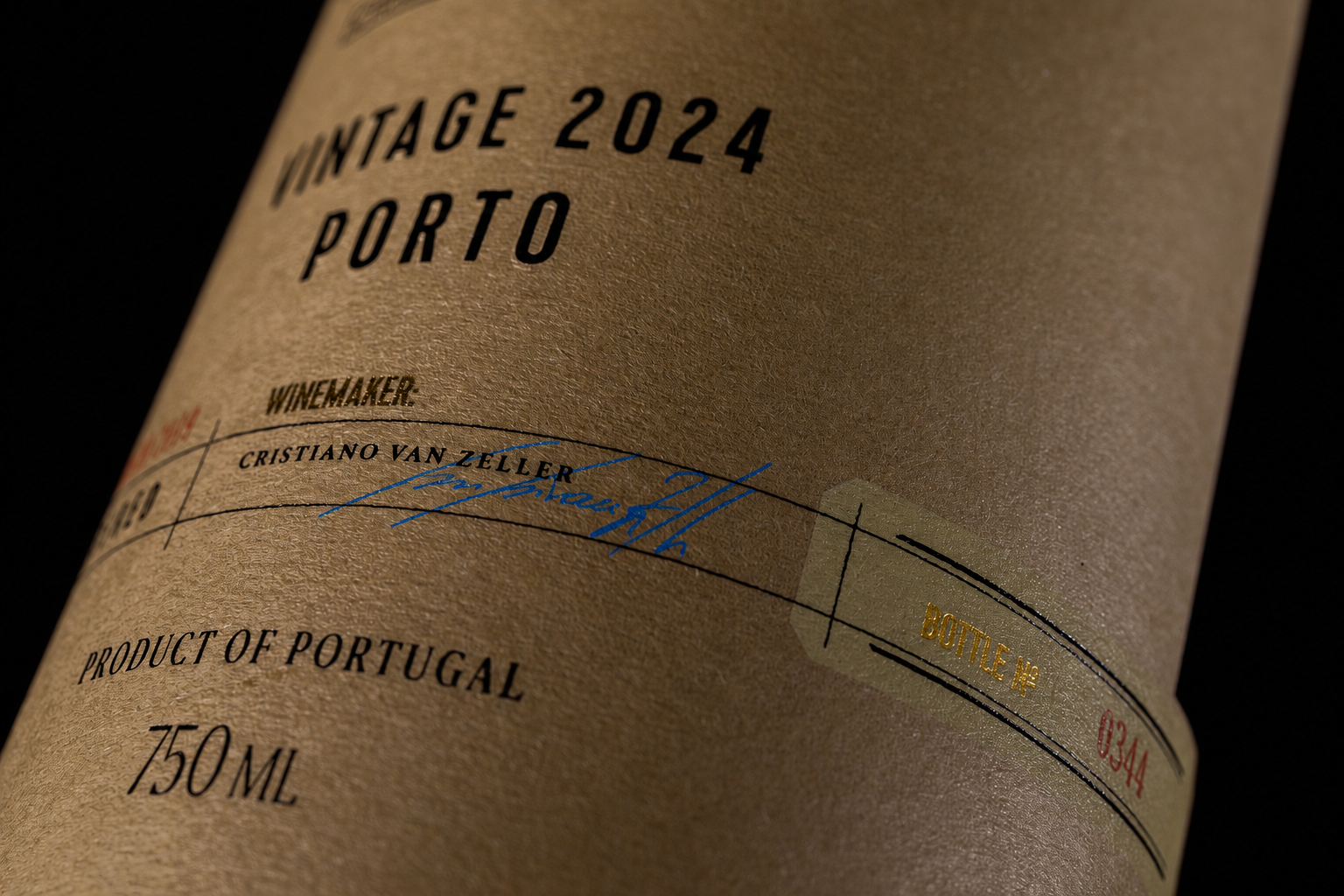
It is a bold expression, I admit. But there are moments when honesty must prevail over restraint. Because this Van Zellers & Co Vintage Port 2024 shows a scale, purity, and precision that are very rarely found.

What’s in the glass

Deep, precise, and intensely restrained, it asserts itself from the very first moment as a wine of exceptional dimension. Its almost impenetrable purple-black color reveals the monumental concentration that defines the great classical Vintage Ports.

On the nose, I find everything I have always sought in the finest Ports from the Douro: crystalline black fruit, rockrose, aromatic freshness, depth, and identity. Cassis, black cherry, ripe plum, and wild blackberry emerge with remarkable definition, wrapped in notes of rosemary, lavender, violet, fine spice, graphite, and balsamic nuances.

On the palate, it is everything a great Vintage should be: powerful yet disciplined; concentrated yet elegant; muscular yet precise. The tannins are deep, dense, and perfectly integrated. The natural acidity provides direction, energy, and longevity. There is strength — but above all, there is balance.

And it is this balance that distinguishes great wines from truly historic ones.

A declaration for history

Throughout my life, I have had the privilege of tasting some of the greatest Vintage Ports ever made, wines that marked generations, defined regions, families, and unrepeatable moments. It is too early to define where 2024 will stand in that history.

But I can say this with complete conviction: we are in the presence of one of the great declarations of this new generation of the Douro. A Vintage classical in its structure, contemporary in its definition, and built to endure, and to move, for many decades.


Nature, bottled

At Van Zellers & Co, we believe that Port wine is not just wine. It is memory. It is culture. It is family. It is nature, bottled.


With only 2,000 bottles produced, this Vintage 2024 represents not just a rare wine, but a statement of what I have always believed: that the Douro remains capable of producing some of the world’s greatest fortified wines when nature, knowledge, and courage align.


2024 joins 2011 and 2017 as one of the great classics of this century. One of the great years of the millennium.


After so many years in the Douro, I still feel what I felt from that very first aroma of
Port wine in childhood:
The Douro never ceases to surprise. And in 2024, it has done so once again.


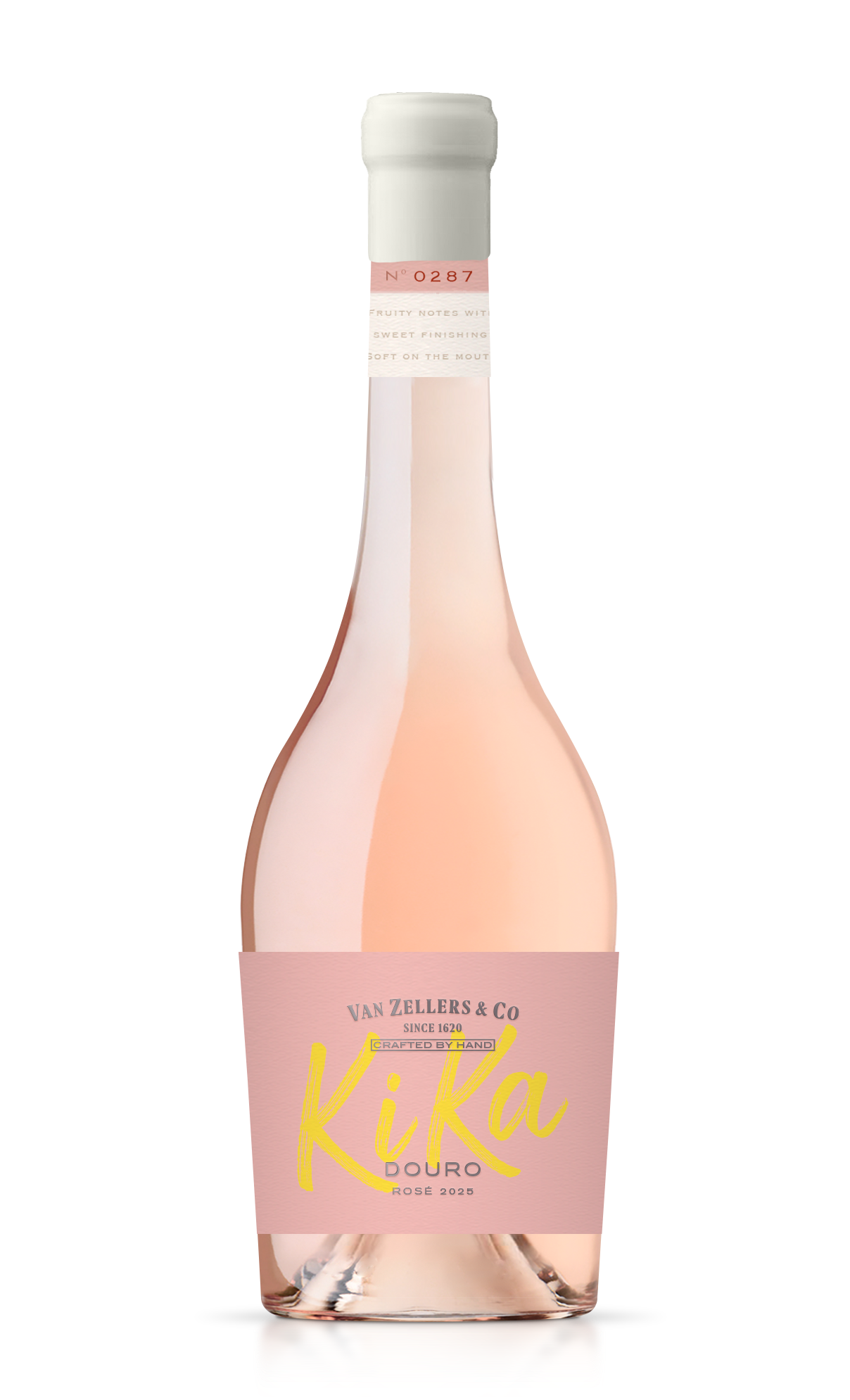
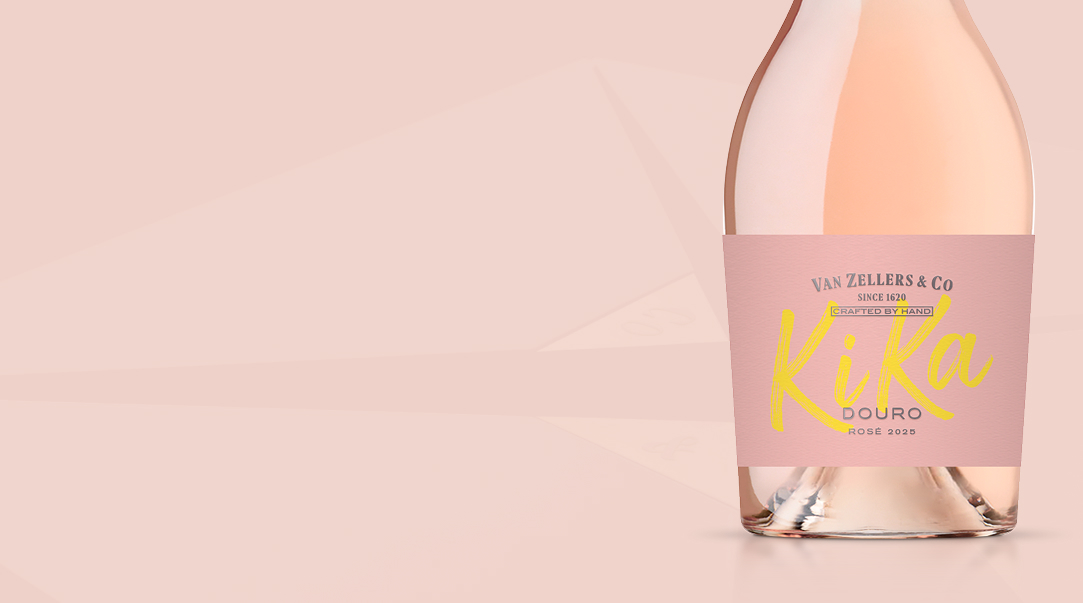
Meet Kika: the rosé that’s here to stay


Fresh, straightforward, no fuss. Kika Rosé is the wine your life was missing.

Three voices, one idea

The people behind Kika explain better than anyone what it represents.

“When I realised the wine was going to carry my name, I felt a huge responsibility and then I realised it wasn’t really my name. Kika isn’t my name. It’s everyone’s name. It’s the name you use for the people you truly like.”
Francisca van Zeller · Storyteller

“I always wanted to make a rosé that didn’t apologise for existing. This wine has structure, it has character: it’s a Douro wine that simply chose to be light. Not because it can’t be serious. Because it doesn’t need to.”
Cristiano van Zeller · Producer

“The challenge was creating freshness without losing identity. Touriga Franca was our anchor, it’s what gives Kika that elegant tension, that nervous energy that keeps you coming back to the glass.”
Joana Pinhão · Winemaker


Kika moments

There’s no wrong moment for a glass of Kika. But there are moments where it shines brighter:

  • ☀️ Long summer lunches
  • 🏖️ Beach or poolside
  • 🌅 Sundowners on the terrace
  • 🎉 The start of a party
  • 🍕 Relaxed dinners
  • 🎸 Festivals or concerts

Kika is the rosé of summer, but also of those October evenings when it’s still warm enough to stay outside. Best served very chilled, between 8 and 10°C. Don’t hesitate, don’t wait, just drink it.


The three personalities behind the wine


Kika is the sum of three grape varieties with very distinct personalities. Together, they form an unbeatable trio.


Touriga Nacional: the extrovert
Walks into the room and everyone turns their head. It brings the explosion of red and black fruit, raspberry, blackberry, cherry, and the floral aromas that make you close your eyes on the first sip.

Tinta Roriz: the one that stays with you
More restrained, but with substance. It gives that grip, that light texture that gives the wine presence on the palate and stops it from slipping away unnoticed. Tinta Roriz is why Kika stays in your memory.

Touriga Franca: the unexpected twist
Small quantity, huge impact. It brings movement, a slightly spicy floral freshness, that touch of sassiness that turns the wine from good to unforgettable. Touriga Franca is the surprise at the end.


Pairings for the truly KOOL

Yes, Kika pairs beautifully with a steak sandwich or a salade niçoise. But that would be too predictable for anyone genuinely kool. Here are the pairings that really matter:

  • 🍣 Fusion sushi: Kika’s fresh acidity cuts perfectly through the richness of salmon. A pairing purists may disapprove of, and that’s perfectly fine.
  • 🌮 Fish tacos with spicy sauce: The rosé refreshes, the spice warms. A dialectic that works better than it sounds.
  • 🍿 Salted caramel popcorn: Sweet, salty, fruity, an unexpected trio for a stylish movie night at home.
  • 🧀 Goat cheese with honey and walnuts: Kika’s freshness balances the cheese’s sharpness. The starter-dessert nobody saw coming.
  • 🍔 A really good burger: Because rosé with burgers is the disruption the world needed. And it works.

Price & availability

RRP €19.50 | Serving temperature 8–10°C | Grapes: Touriga Nacional · Tinta Roriz · Touriga Franca

Kika Douro Rosé 2025 is available now.

Because at the end of the day, the only rule that matters is this:

Keep It Kool Always.

#kikawine · #KeepItKoolAlways · kika rosé

DaRe to be a Port Lover?
Subscribe to stay up to date with our news
By subscribing you agree to the privacy policy

Thank you

Your subscription request was registered successfully.
You can unsubscribe at any time.

You've unsubscribed from our mailing list.