loader image

From the Soil Up: Our Partnership with the University of Aveiro and Entogreen

The Science Behind the Study

In February 2024, we launched a three-year field trial in partnership with the University of Aveiro’s Department of Biology, CESAM, and EntoGreen, a
Portuguese company specialising in insect biotechnology, specifically Black Soldier
Fly (BSF). The trial is part of the InsectERA Agenda Mobilizadora, a national programme funded by the European Union that explores the role of insects in sustainable agriculture and the circular economy.

The study is being conducted on a parcel in Valença do Douro, at 400 metres altitude, planted over 40 years ago. These are old vines — not yet centenarian, but mature enough to express the kind of vine age that truly matters. They were chosen for a practical reason: the gentler terrain and better road access allow for more rigorous
scientific measurement than steeper, more remote sites. The intention is to apply what we learn in Valença do Douro further upstream — in our centenarian vineyard, Vinha das Silvas, on the schist slopes above the Rio Torto. Science begins where it can be done best. The ultimate focus is always the oldest vines.

At the centre of the study is something called frass — an insect-derived organic fertilizer. Frass is rich in organic matter, contains chitin residues from the insects themselves, and is nutrient-dense. It is produced through the bioconversion of larvae
of Hermetia illucens, the Black Soldier Fly. These larvae are extraordinary bioconverters: fed with olive pomace (the solid residue from olive oil production), they process this by-product and leave behind a fertilizer rich in nitrogen, phosphorus, organic matter, macro- and micronutrients, chitin, and diverse microbial activity.

The circular logic of this system is important to us. The olive pomace that feeds the larvae comes from the same agricultural landscape that surrounds our vineyards. What returns to the soil is not a synthetic input, but a living, biologically active material — the by-product of a by-product, transformed into something that nourishes the oldest vines of the Douro.

What the Results Show

The trial runs until 2027, and we are deliberately cautious about drawing conclusions before final results. That said, the interim report from January 2026, produced by the University of Aveiro, contains findings we believe are worth sharing.

Across all fertilised plots, organic treatments — including insect frass — stimulated measurable enzymatic activity in the soil. Enzymes are the engine of soil biology: they break down organic matter, release nutrients, and sustain the microbial communities that underpin vine health. Seeing this activity increase is a meaningful signal.

Perhaps even more relevant for the long-term health of these vineyards: soil water retention capacity increased substantially compared to the baseline measurement taken in January 2024, when compared to data recorded in July 2025. In a semi-arid region where summer droughts are becoming more frequent and severe, the soil’s ability to retain moisture is not a minor detail — it is a question of resilience. The increase in organic matter, confirmed through loss-on-ignition data, shows that the soil is actively changing.

As for the vines: physiological measurements indicate healthy levels of chlorophyll and carotenoids across all plots, consistent with well-nourished plants. No negative impact on vine health has been identified. So far, the biological indicators are positive.


Why Old Vines, and Why Now
There is a reason this study begins with old vines rather than young ones. The 40- year-old parcel in Valença do Douro is not ancient — but it represents what the Douro achieves when a vineyard is allowed to mature: deep root systems exploring schist soils, natural resilience to drought, and a relationship with the soil built over decades, not seasons. These are the qualities we aim to understand, protect, and reinforce.

Our ultimate concern, however, lies with truly old vineyards — the centenarian vines of Vinha das Silvas, above the Rio Torto, planted over a century ago and carrying genetic heritage that modern viticulture has largely lost. As members of The Old Vine Conference, a global non-profit organisation dedicated to the recognition and protection of historic vineyards, we believe that caring for old vines is a form of agricultural conservation.

The frass study is the science behind that conviction: a rigorous attempt to understand what these vines require from their soil and how we can provide it without resorting to synthetic solutions. We begin in Valença do Douro because conditions allow us to do the science properly. What we learn there, we intend to bring to the Silvas.

Looking Ahead
The trial will continue until 2027. We will share final conclusions once they are published. Until then, we extend our thanks to the team at the University of Aveiro — particularly the researchers from the Department of Biology and CESAM — and to Entogreen, for their partnership, rigour, and willingness to bring their science into
these very old vineyards.

The Douro has always been a place where survival required ingenuity. The vineyards of Valença do Douro have grown here for over forty years. The centenarian vines of Vinha das Silvas for more than a hundred. Our intention is to give them every possible advantage for the decades ahead.


The University of Aveiro field trial — “Assessment of the impact of frass on plant and soil health and productivity in Douro vineyards” — runs from February 2024 to 2027. It is conducted in partnership with the University of Aveiro’s Department of Biology, CESAM, and EntoGreen, within the framework of the EU-funded InsectERA Agenda Mobilizadora.
We Declared 2024


“Frankly, I think it’s a bomb.”
— Cristiano van Zeller

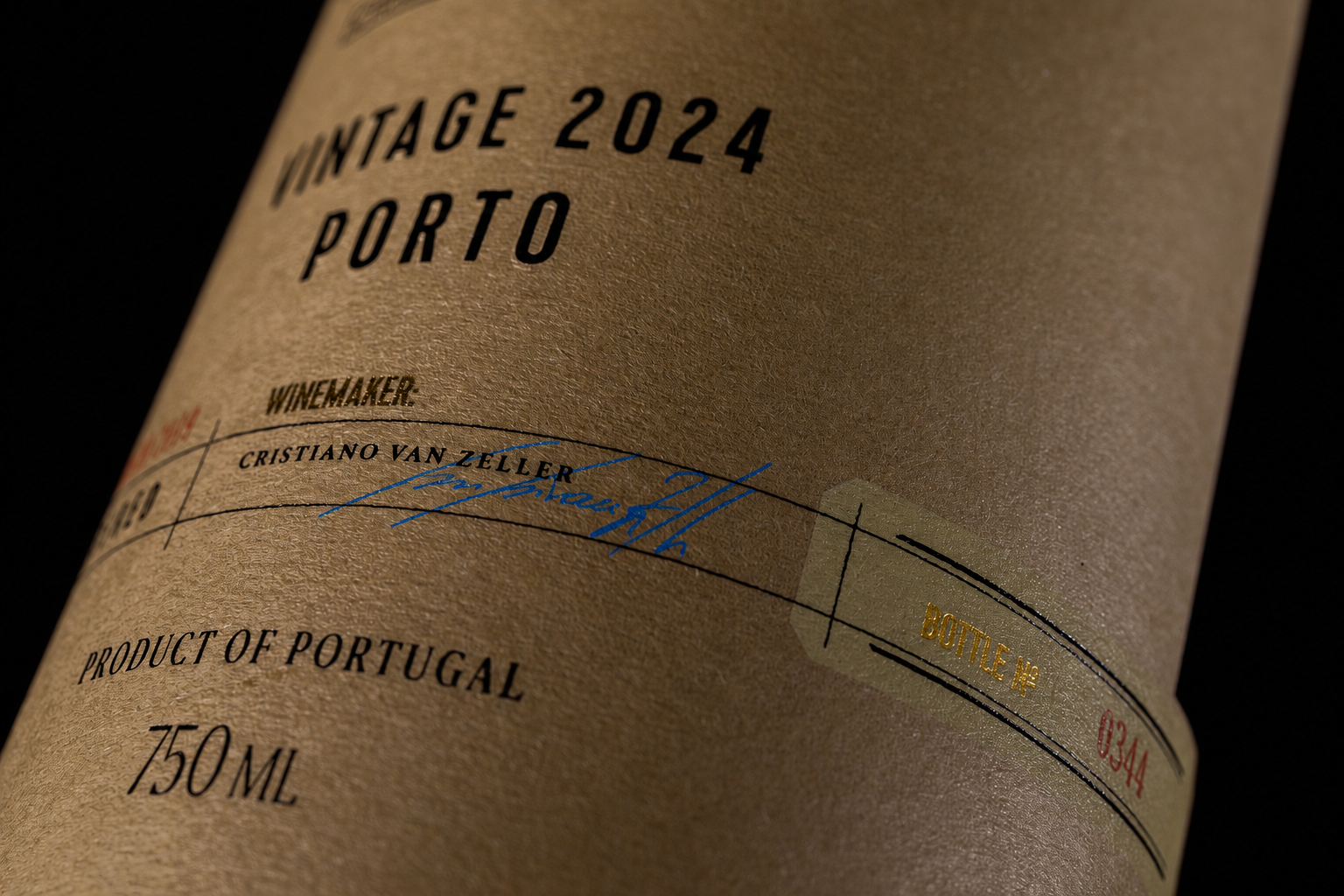
It is a bold expression, I admit. But there are moments when honesty must prevail over restraint. Because this Van Zellers & Co Vintage Port 2024 shows a scale, purity, and precision that are very rarely found.

What’s in the glass

Deep, precise, and intensely restrained, it asserts itself from the very first moment as a wine of exceptional dimension. Its almost impenetrable purple-black color reveals the monumental concentration that defines the great classical Vintage Ports.

On the nose, I find everything I have always sought in the finest Ports from the Douro: crystalline black fruit, rockrose, aromatic freshness, depth, and identity. Cassis, black cherry, ripe plum, and wild blackberry emerge with remarkable definition, wrapped in notes of rosemary, lavender, violet, fine spice, graphite, and balsamic nuances.

On the palate, it is everything a great Vintage should be: powerful yet disciplined; concentrated yet elegant; muscular yet precise. The tannins are deep, dense, and perfectly integrated. The natural acidity provides direction, energy, and longevity. There is strength — but above all, there is balance.

And it is this balance that distinguishes great wines from truly historic ones.

A declaration for history

Throughout my life, I have had the privilege of tasting some of the greatest Vintage Ports ever made, wines that marked generations, defined regions, families, and unrepeatable moments. It is too early to define where 2024 will stand in that history.

But I can say this with complete conviction: we are in the presence of one of the great declarations of this new generation of the Douro. A Vintage classical in its structure, contemporary in its definition, and built to endure, and to move, for many decades.


Nature, bottled

At Van Zellers & Co, we believe that Port wine is not just wine. It is memory. It is culture. It is family. It is nature, bottled.


With only 2,000 bottles produced, this Vintage 2024 represents not just a rare wine, but a statement of what I have always believed: that the Douro remains capable of producing some of the world’s greatest fortified wines when nature, knowledge, and courage align.


2024 joins 2011 and 2017 as one of the great classics of this century. One of the great years of the millennium.


After so many years in the Douro, I still feel what I felt from that very first aroma of
Port wine in childhood:
The Douro never ceases to surprise. And in 2024, it has done so once again.


Posted in Uncategorized

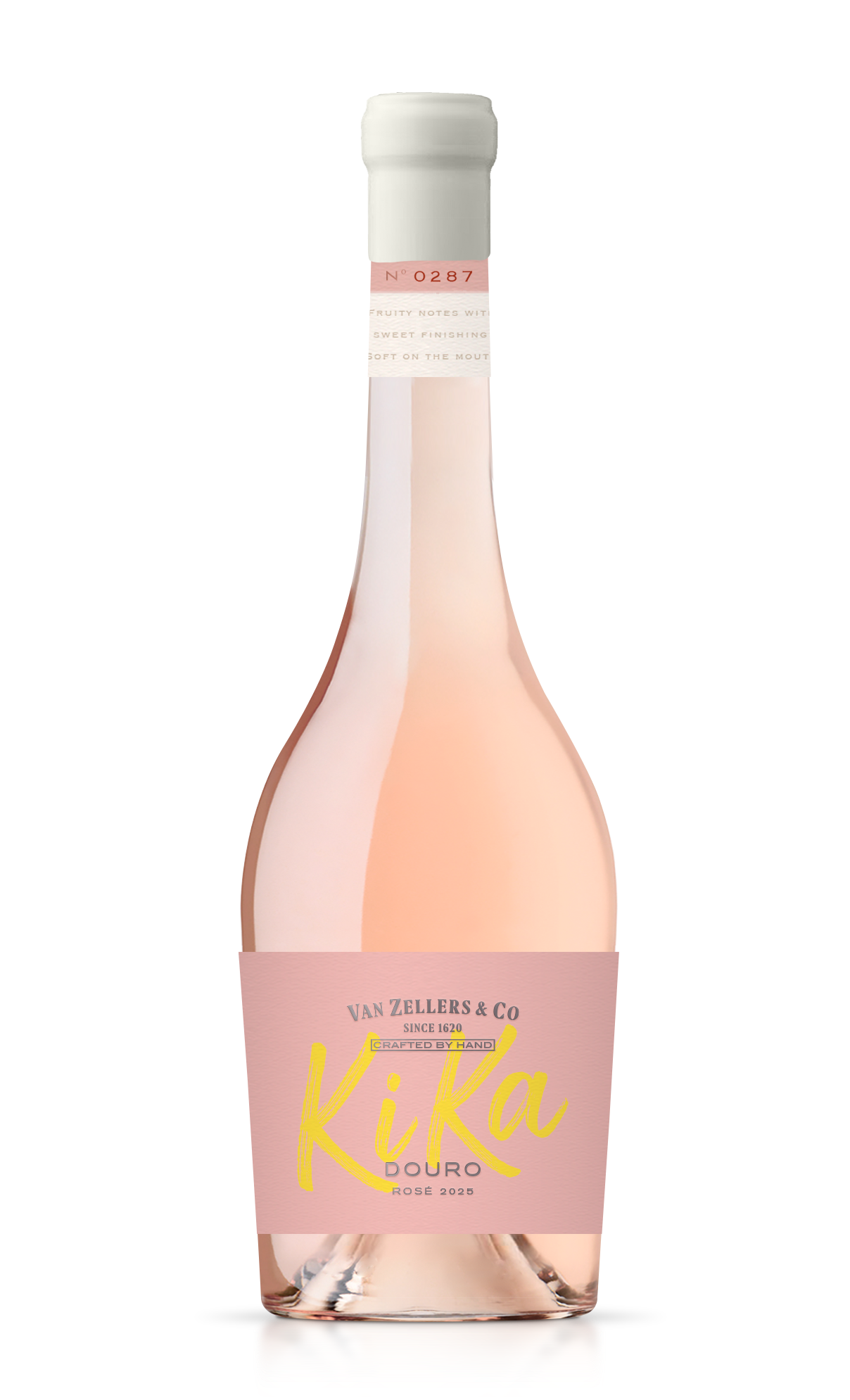
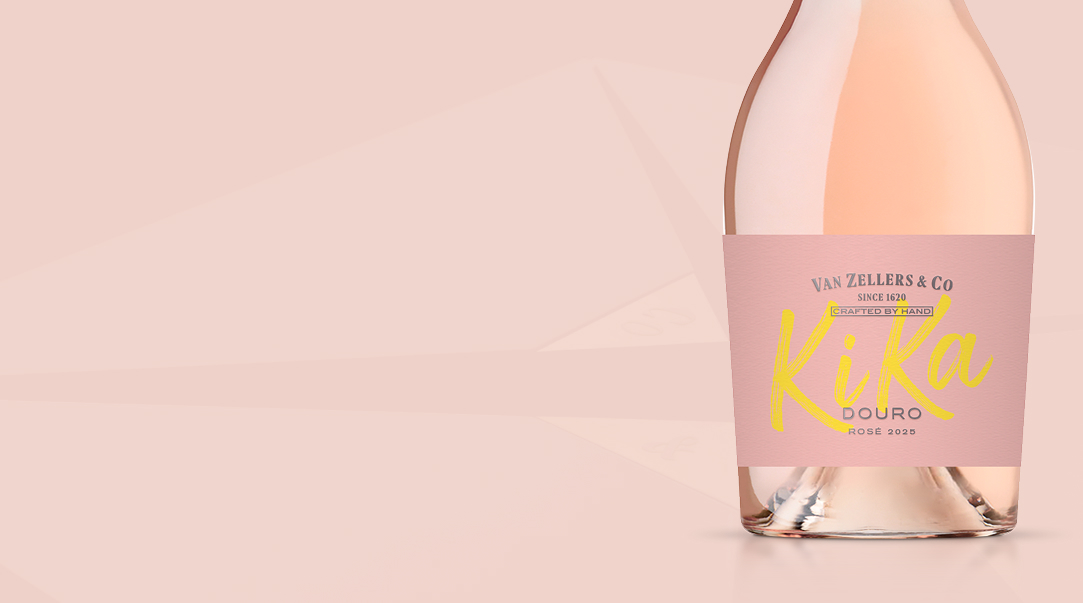
Meet Kika: the rosé that’s here to stay


Fresh, straightforward, no fuss. Kika Rosé is the wine your life was missing.

Three voices, one idea

The people behind Kika explain better than anyone what it represents.

“When I realised the wine was going to carry my name, I felt a huge responsibility and then I realised it wasn’t really my name. Kika isn’t my name. It’s everyone’s name. It’s the name you use for the people you truly like.”
Francisca van Zeller · Storyteller

“I always wanted to make a rosé that didn’t apologise for existing. This wine has structure, it has character: it’s a Douro wine that simply chose to be light. Not because it can’t be serious. Because it doesn’t need to.”
Cristiano van Zeller · Producer

“The challenge was creating freshness without losing identity. Touriga Franca was our anchor, it’s what gives Kika that elegant tension, that nervous energy that keeps you coming back to the glass.”
Joana Pinhão · Winemaker


Kika moments

There’s no wrong moment for a glass of Kika. But there are moments where it shines brighter:

  • ☀️ Long summer lunches
  • 🏖️ Beach or poolside
  • 🌅 Sundowners on the terrace
  • 🎉 The start of a party
  • 🍕 Relaxed dinners
  • 🎸 Festivals or concerts

Kika is the rosé of summer, but also of those October evenings when it’s still warm enough to stay outside. Best served very chilled, between 8 and 10°C. Don’t hesitate, don’t wait, just drink it.


The three personalities behind the wine


Kika is the sum of three grape varieties with very distinct personalities. Together, they form an unbeatable trio.


Touriga Nacional: the extrovert
Walks into the room and everyone turns their head. It brings the explosion of red and black fruit, raspberry, blackberry, cherry, and the floral aromas that make you close your eyes on the first sip.

Tinta Roriz: the one that stays with you
More restrained, but with substance. It gives that grip, that light texture that gives the wine presence on the palate and stops it from slipping away unnoticed. Tinta Roriz is why Kika stays in your memory.

Touriga Franca: the unexpected twist
Small quantity, huge impact. It brings movement, a slightly spicy floral freshness, that touch of sassiness that turns the wine from good to unforgettable. Touriga Franca is the surprise at the end.


Pairings for the truly KOOL

Yes, Kika pairs beautifully with a steak sandwich or a salade niçoise. But that would be too predictable for anyone genuinely kool. Here are the pairings that really matter:

  • 🍣 Fusion sushi: Kika’s fresh acidity cuts perfectly through the richness of salmon. A pairing purists may disapprove of, and that’s perfectly fine.
  • 🌮 Fish tacos with spicy sauce: The rosé refreshes, the spice warms. A dialectic that works better than it sounds.
  • 🍿 Salted caramel popcorn: Sweet, salty, fruity, an unexpected trio for a stylish movie night at home.
  • 🧀 Goat cheese with honey and walnuts: Kika’s freshness balances the cheese’s sharpness. The starter-dessert nobody saw coming.
  • 🍔 A really good burger: Because rosé with burgers is the disruption the world needed. And it works.

Price & availability

RRP €19.50 | Serving temperature 8–10°C | Grapes: Touriga Nacional · Tinta Roriz · Touriga Franca

Kika Douro Rosé 2025 is available now.

Because at the end of the day, the only rule that matters is this:

Keep It Kool Always.

#kikawine · #KeepItKoolAlways · kika rosé

What makes white wines fresh is not just the temperature

The Real Basis of Freshness: Acidity

Acidity is the main pillar of freshness.


Acidity is the main pillar of freshness.
 A white wine with high natural acidity – like an Arinto or Riesling – gives a sensation of lightness, vibrancy, and impressive palate freshness. Acidity balances alcohol and body, contributing to a clean and persistent finish.
 As Matt Kramer states, the structure of the wine — and not just its temperature — is what keeps the wine alive:

 “Structure can refer to acidity, sugar, alcohol… each are preservatives that ward off oxidation and decay.”

 A wine with an unbalanced structure, even when chilled, can feel “flat” or lifeless.

Terroir, Grapes, and Winemaking

Freshness also comes from the vineyard.
 Cooler climates, higher altitudes, and poor or granite soils favor more vibrant, mineral white wines.

Critic Jamie Goode described a white wine from Languedoc as “rich and fresh at the same time,” emphasizing that richness and freshness can coexist if the wine is made with healthy grapes from the right varieties.

The choice of grape variety is key:

• Arinto, Loureiro, or Rabigato bring natural acidity.
 • Chardonnay or Antão Vaz need careful winemaking to preserve freshness.
Techniques like:
• Soft pressing,

• Fermentation at low temperatures,

• No bâtonnage, or

• Moderate (or zero) use of oak

are tools that winemakers use to preserve the vibrant and light character of a wine that is both rich and fresh at the same time.

The Wisdom of Those Who Know the Douro Like No One Else

In the Douro, freshness is not always easy to find — but it can be naturally found in the right vineyards.

As Cristiano van Zeller explains:

“The true freshness of our white wines comes from altitude and the age of the vines. The deep roots of these century-old vines help maintain natural acidity, even in warmer years. Nature does its work — and we just respect it.”

It is precisely this philosophy that gives rise to wines like CV Branco and VZ Branco. Made from very old vines, these are whites that combine minerality and longevity — with freshness felt on the palate and not just in the bottle’s temperature.

João Paulo Martins: The Right Whites for Summer

Portuguese critic João Paulo Martins often highlights fresh white wines as ideal for the summer, not because they are served ice-cold, but because they have:
• Prominent acidity,

• Vibrant varietal profiles (such as Alvarinho and Loureiro),

• And moderate alcohol content.

So What is “Freshness” in a White Wine?

We can think of it as the sum of:

• High acidity

• Citrusy or floral aromas

• Light or medium body

• Low alcohol content (ideally below 13%)

• Dry and mineral finish
Low temperature helps, yes. But the wine itself must have intrinsic freshness.

Conclusion: More Than a Chilled Glass, a Living Wine

The next time you pour a white wine, think: Am I tasting only the chill from the fridge? Or was this wine crafted to vibrate, even at 10°C?
 As Jancis Robinson said, we shouldn’t anesthetize the wine with ice. True freshness comes from the acidity, terroir, and the winemaker’s touch — and continues with the pleasure of each sip.

Posted in Uncategorized

Meet the Woolly Guardians 
of CV Vineyard!

New Arrivals: More Hooves on the Ground!


Just when we thought our little sheep family was complete, we welcomed new residents on February 25th—two adult sheep and two small ones!
Our little ecosystem is growing, and with more mouths to graze, the vineyard and olive groves are getting even more love. Watching these animals become part of our landscape has been an incredibly rewarding experience. It’s not just about their practical benefits—it’s about embracing nature’s rhythms and creating a healthy, balanced vineyard where biodiversity thrives.

Why Sheep? A Step Towards a Regenerative Future
Bringing sheep into the vineyard isn’t just a cute idea—it’s part of our long-term commitment to sustainability. Regenerative viticulture is all about restoring soil health, increasing biodiversity, and reducing our impact on the environment. Here’s why our woolly workers are a perfect fit:

  • No More Mowers – Instead of using fuel-powered machines to control vegetation, our sheep do the job naturally, reducing carbon emissions.
  • Living Fertilizer – Their droppings are packed with nutrients, enriching the soil and promoting healthier vines.
  • Soil Protection – By gently disturbing the topsoil, they encourage better aeration and water absorption, reducing erosion.
  • Biodiversity Boosters – More animal presence means more beneficial insects, microbes, and overall vineyard resilience.

The Future: More Sheep, More Growth?
With our latest arrivals settling in, we’re already dreaming of expanding the flock. Perhaps more little lambs will be born in the vineyard, strengthening our connection to this natural approach. One thing is certain—the sheep aren’t just visitors; they’re part of the Van Zellers & Co family now.
So, next time you open a bottle of CV Curriculum Vitae, know that it comes from a vineyard where nature leads the way—where woolly workers, ancient vines, and regenerative practices come together to create wines full of life and soul.
Want to meet our sheep? Stay tuned—we might just have some vineyard visits planned where you can say hello to these adorable vineyard keepers in person!


Cheers to nature, to great wine, and to our ever-growing flock!

Harvest 2024: A Family Adventure 
in the Douro

The Climate: Nature Challenging Us (as Always)

The year began with a warm and rainy winter—the kind of conditions that make the vines smile and grow healthy. March brought a deluge that gave us some headaches, but April warmed things up and brought a dose of optimism for the rest of the cycle. Summer was marked by the typical Douro heat and dryness, but September delivered milder temperatures, giving the grapes the time they needed to achieve perfect balance.

Work, Laughter, and Achievements

The harvest is always an intense moment, but it’s also filled with camaraderie and celebration. This year, we faced minor challenges—pests like the grape moth and scale insects made their appearance—but nothing our team couldn’t handle with expertise. After all, at Van Zellers & Co, we know every challenge is an opportunity to learn and improve

The Result: Wines that Tell Stories

With grapes in excellent phytosanitary condition and production above average, the 2024 harvest already promises wines that will be unforgettable. Each bunch harvested is another piece of a puzzle that results in authentic wines, imbued with the soul of the Douro and the signature of our team.
This year’s harvest was special—not just for what we gathered, but for what we experienced together. This is how Van Zellers & Co continues to transform hard work into legacy, always with a touch of passion, humor, and, of course, a glass of wine in hand to celebrate

EXPLORE OUR WINES

The Perfect Tawny Port Pairing

ALMENDRADO RECIPE

INGREDIENTS

  • 4 egg whites
  • 250g ground almonds
  • 200g brown sugar
  • 2 tablespoons flour
  • 1 teaspoon baking powder
  • 1 teaspoon cinnamon
  • Rice paper
  • 1 pinch of salt
  • Whole almonds (for garnish)

INSTRUCTIONS

  1. Preheat the oven to 180ºC.
  2. Add a pinch of salt to the egg whites, and beat until stiff peaks form.
  3. Gradually add flour, sugar, and cinnamon to the mixture until smooth.
  4. Gently fold in the ground almonds with a spatula until well combined.
  5. Line a baking tray with greaseproof paper and lay rice paper on top.
  6. Use a dessert spoon to scoop balls of dough onto the tray, spacing them to allow for rising.
  7. Place one whole almond on each cookie, pressing down lightly.
  8. Bake for about 20 minutes, or until golden brown.
  9. Allow the cookies to cool, then trim the rice paper edges as needed.

Serve these with a glass of our Tawny Port, and enjoy each delicious layer as they unfold in harmony with the wine.

The Circle of Life

We were part of a silent revolution and a come back to the roots – in fact the Douro wine production was for centuries centred in the production of reds – Port was an accident of Nature and one of the first marketing products in the wine world. The market was asking for this naturally sweet wine…

And now I´m are back to my beginning  after selling Quinta Vale D. Maria in 2017 –  Van Zellers & Co is mainly a Port wine company focused in the production of high quality Ports. We also have high quality Douro Doc reds and whites,  Cv-Curriculum Vitae and VZ-Van Zellers & Co, but my main passion are the Tawnies or as we now call them the Crafted by Time Ports.

And it really is about time, something scarce that seems immense when one starts roaming the circle of life.
 

Posted in Uncategorized

Sea Change

Outside one restaurant, a woman was flinging squid onto the coals with impressive ferocity, scowling into shimmering heat. I pulled up a plastic chair, ordered sardines, which arrived grilled with wedges of lemons, a juicily ripe tomato salad and boiled potatoes swimming in garlic butter. ‘And some wine, senhorinha?’ Yes, what a good idea. The carafe of very cold, crisp vinho verde cut through the salt-crusted, blackened fish skin. I turned my face up to the sky, blue as an azulejo tile, and for the first time in days, smiled. Everything was going to be okay. Because if I could be content there, in that moment, then happiness could happen again and again and again.

Here’s what I remember. Carrying glasses of Joáo Pato’s sparkling, salmon-coloured Bairrada into Praça das Flores at dusk, while a saxophonist plays beside the fountain, and everyone watches each other circling in the sultry air. We chose wines, unashamedly, for the quirkiness of their labels – perhaps a wild boar (Crazy Javali) or a skull-and-crossbones (Pirata da vaiuva) or a nun (Il Ceo). And as Londoners, we were astounded how Portuguese wine bars let us sample four or five different varieties before settling on which we wanted – such hospitality!

Driving to a seafood shack in Famalicão Nazaré for my first taste of percebes. Perilous to harvest (fishermen scale steep cliffs with ropes to reach the goose barnacles), their appearance is part dinosaur’s claw, part elephant’s leg. My companions – a motley crew comprising an actor, a vintner, a designer – demonstrate how to snap off the top of the shell and prise out the clam-like slivers of meat. Though unlovely to look at, the flavour smacks of the sea. A bottle of buttery Van Zellers & Co VZ Douro Branco 2017 is uncorked. Platters of oysters and mussels keep coming. The name, they tell me, is pronounced per-se-besh, which also means “He/she understands.” Well, I was starting to.

Jantar debaixo dos limoeiros do Paço da Glória, uma casa senhorial no Minho. A cera a acumular-se à volta das velas e as garrafas de vinho vazias a estampar formas arredondadas cor-de-rosa na toalha de linho, enquanto eu falava com um grupo de estranhos sobre o luto – Não é que ele surge em momentos tão estranhos e inesperados? E não é sombrio quando se tinha uma relação difícil com a pessoa que faleceu? É uma alegria poder dizer coisas que a minha própria família, limitada pela famosa reserva britânica, não aceitaria à mesa de jantar.

Dining beneath the lemon trees at Paco da Gloria, a manor house in Minho. Wax pooling around candle stumps and empty wine bottles stamping pink crescents onto the linen tablecloth as I talk with a group of strangers about grief – Doesn’t it strike at such odd, unanticipated moments? Isn’t it murky when you had a strained relationship with the person who passed away? – giddy at being able to say things that my own family, hampered by that notorious British reserve, wouldn’t welcome at the dinner table.
 
Scuba diving from Sines harbour to explore Ecoalga’s underwater wine cellar. Tiny marine creatures have left their lacework over the bottles. Apparently, wines age faster down here than back on terra firma, gently rocked by the current in the cool dark depths. A phrase drifts into my mind: sea-change. The first recorded mention is in Shakespeare’s The Tempest. “Nothing of him that doth fade, but doth suffer a sea change, into something rich and strange.” Ariel’s Song is about a drowned king, but the expression’s come to mean either a change brought about by the sea, or more broadly, a profound or notable transformation of any kind. Back at the surface, bobbing on the grey-green waves, I stretch my fingers wide, no longer clinging onto broken things like a shipwrecked soul. There’s some relief, after all, in releasing, in being adrift, alone. Precious things had been wrenched from my grip; let them settle on the seabed like a treasure chest.

So many of the people I met in Portugal had undergone their own sea-changes. The lawyer turned award-winning cheesemaker Joana Garcia. A former freediver who’d retrained as a death doula. All the women who’d one day decided to move themselves from South Africa or Australia or Brazil to this corner of Europe – because they wanted to, because they could.
 
Of course, those months had low points, too. And I won’t miss being driven from bed each morning by the sound of drilling and stifling heat – sleep deprived, head pounding, throat parched – because our third-floor apartment, for all its beautifully curated bookshelves and antique tiles and enviable Principe Real location, turned out to a veritable furnace and backed onto a construction site.
 
Mostly, however, that summer was a series of gilded, glass-measured moments. I took my medicine – laughter, sunlight, wine – and felt braver than before.

Posted in Uncategorized
DaRe to be a Port Lover?
Subscribe to stay up to date with our news
By subscribing you agree to the privacy policy

Thank you

Your subscription request was registered successfully.
You can unsubscribe at any time.

You've unsubscribed from our mailing list.